Knowledge Hub
If you are in a terrace, the positioning will also depend on whether you are extending out to the section to the rear known as an outrigger as well as the main roof – often these two spaces in old Victorian homes in particular, can be at different levels so this will impact how a staircase can be positioned as you may need to access at both levels.
Typically, your staircase will go over the one coming up from the ground floor, and in many instances, you may need to pinch some space from one of the first-floor rooms to allow for this. This will ensure that you get clear headroom at both levels – clear headroom under the regulations means you need to have 2m minimum clearance in a vertical line from each step to the structure above; this can be tight if you do not have a lot of height in the existing loft although there are workarounds such as using better performing insulation and lowering ceilings at first floor level is space is tight and in lofts there can be some small exceptions for half of the width where 1.9m would be permitted. Worth remembering that you do not need 2m clearance in rooms, only to staircases.
Normally we would advise that to comfortably accommodate a stair for lofts, the attic space before any conversion from the existing structure in the roof floor to the pitched roof structure should be over 2.4m – this will then allow for insulation to the roof which you will need to meet regulations and increasing the floor thickness which will most likely be needed since most existing attics are not designed to take loads needed to be living spaces.
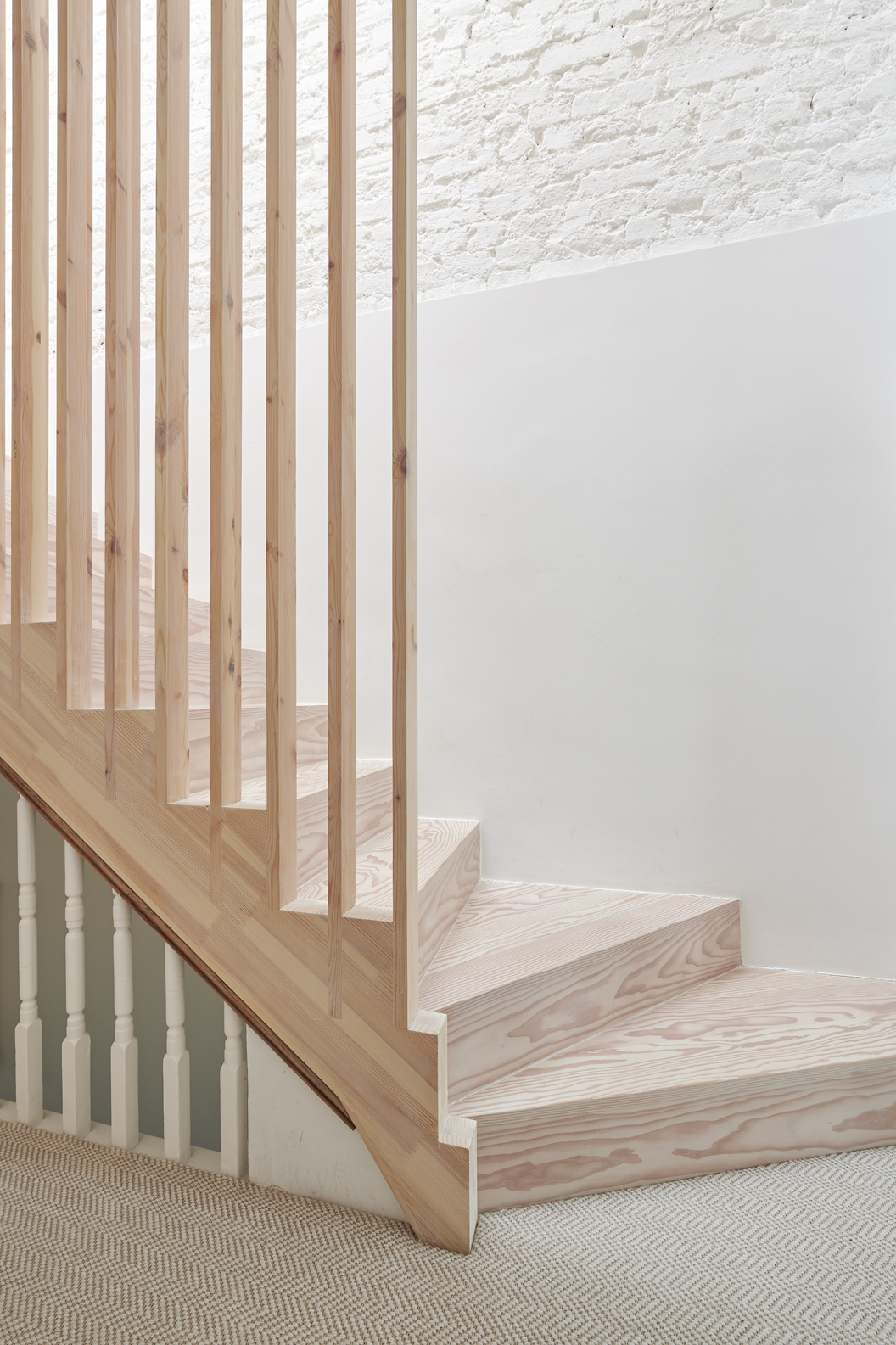
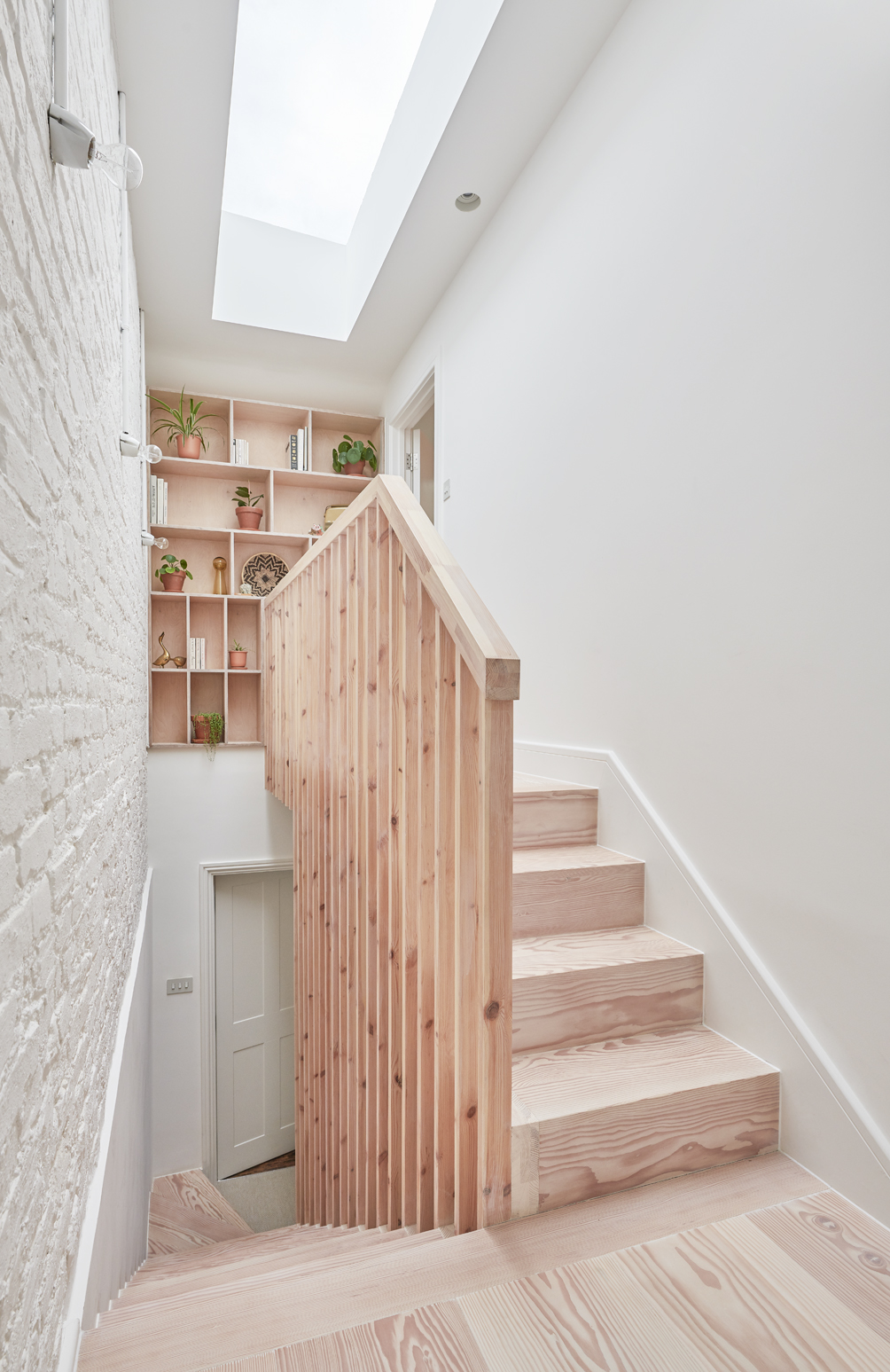
The building regulations that cover stairs also outlines requirements for handrails, although you can be creative around how these are dealt with as shown in the image. Although there is no minimum width requirement, we would recommend 90 cm wide to be able to comfortably get furniture up – if limited you can go for a little less.
In parallel and an important consideration is that of fire, and how someone can escape from the top floor and in most instances (unless you are installing a domestic sprinkler system) you will need to have a protected hallway where the stair is all the way to ground exit level – this can impact doors in hallways too and these should be clear of the top and bottom of stairs – if this is eating up too much space you can think about the use of sliding doors to help.
Generally, in terms of design, think about how you can get natural light all the way down through the stair either by a tall window or skylight at the top and if you can be creative with storage on the landing and also if you want to integrate a modern style or one that matches the existing house.